The European Union presented a balanced but cautious assessment of Pakistan's GSP Plus report
Published Jul 27, 2026 | By Nouman Shakeel
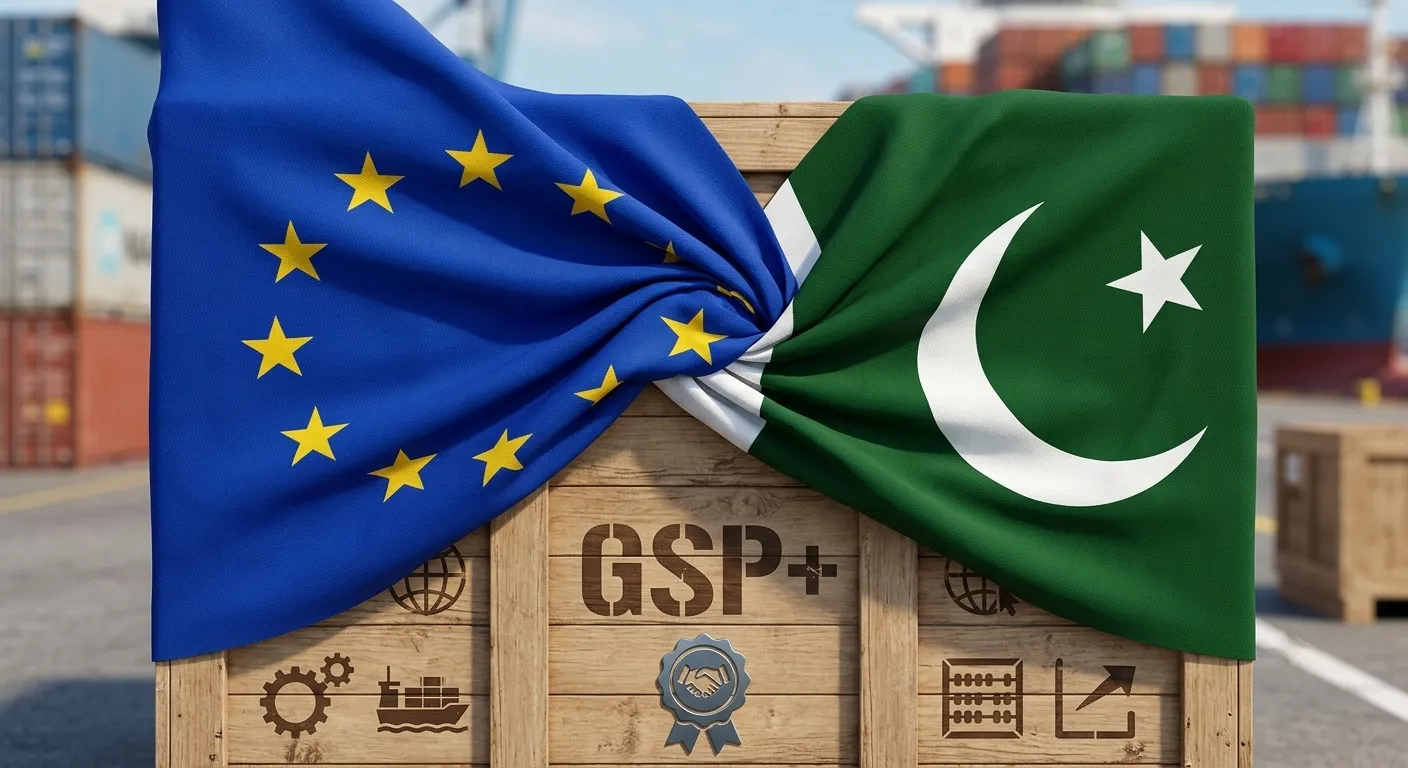
The European Union’s review of Pakistan’s GSP+ preferential trade scheme presents a balanced but cautious picture.
While the report commends progress in some areas of human rights and legislation, it also raises serious concerns about political rights, independence of the judiciary, enforced disappearances, freedom of the media and freedom of expression.
The report makes it clear that it neither recommends withdrawing Pakistan’s GSP+ nor does it consider the country’s overall performance to be entirely satisfactory.
According to the report, Pakistan has taken positive steps to strengthen human rights institutions, establish a National Commission for Minorities, limit the scope of the death penalty, maintain an undeclared moratorium on executions, implement the Anti-Violence Law and prevent violence against women.
On the other hand, the European Union has also expressed concerns regarding political freedoms, the independence of the judiciary, enforced disappearances, media freedom, blasphemy, anti-terrorism and the application of cybercrime laws.
The report stressed that the ratification of international agreements and the approval of laws, along with their effective implementation, are essential, especially since the new EU GSP rules will come into effect from January 1, 2027, which include stricter requirements for sustainability and better governance.
According to the report, GSP Plus has proven to be extremely beneficial for Pakistan. During 2024 alone, Pakistan exported about 7.5 billion euros under this scheme, while tariff concessions were estimated at 732 million euros.
According to analysts, GSP Plus should be considered a transitional arrangement rather than a permanent facility. This concession is conditional and unilateral in nature, which the European Union can suspend or limit at any time. In addition, the new GSP Plus scheme has given more importance to strictness and effective implementation of the conditions.
Experts say that Pakistan should make progress towards comprehensive free trade agreements with other countries, including the European Union, by reforming its trade policy, reducing tariffs and making the economy more competitive, so that the country's exports can be promoted on a more sustainable and diversified basis.
According to experts, a large and capable country like Pakistan should set the goal of establishing strong and permanent trade partnerships in global markets instead of relying on unilateral trade concessions.